After more than three months of recovery, Mr. K from Bangladesh has finally had his gastric tube removed and regained the ability to eat by mouth. "I am so grateful to West China Hospital and to Professor Chen Fei's team for giving me a new life," he said.
Mr. K was first diagnosed with squamous cell carcinoma of the larynx in 2001. He subsequently experienced multiple recurrences and metastases, undergoing surgeries and two courses of radical radiotherapy in hospitals across Bangladesh, the United States, and other countries. Although he successfully defeated the cancer, the treatments came with devastating consequences. He lost his larynx, thyroid gland, and cervical esophagus. The soft tissues in his neck became severely fibrotic, leaving him with a rigid "frozen neck." In 2016, he underwent flap reconstruction surgery in the United States, but poor blood supply led to flap necrosis, rendering the cervical esophagus completely nonfunctional. For nine years, he was unable to eat by mouth and relied entirely on a gastrostomy tube for nutrition.
Hoping to regain oral feeding, and following recommendations from experts in Bangladesh and abroad, Mr. K came to WCH for treatment in late November 2025.
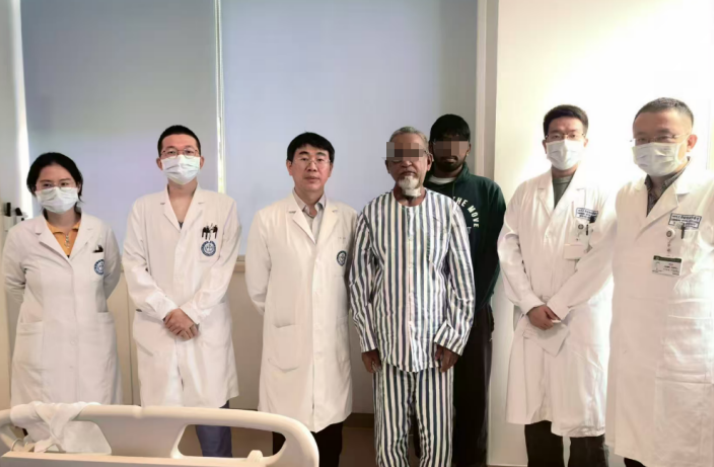
Faced with this highly complex case, Professor Chen Fei from the Department of Otorhinolaryngology – Head and Neck Surgery immediately assembled a multidisciplinary team (MDT) with experts from the Cardiology Department, Anesthesiology Department, Clinical Nutrition Department, and Radiology Department. Professor Chen noted that the core challenges of treatment included severe cervical scarring, soft tissue fibrosis, and extremely poor blood supply resulting from multiple prior surgeries and two courses of radical radiotherapy, all of which contributed to his "frozen neck." Additionally, major blood vessels in the neck were exposed, and any failure in reconstruction could trigger fatal massive hemorrhage.
After thorough preoperative preparation, Professor Chen Fei's team performed an innovative procedure using a "free flap reutilization" technique combined with a cervico-thoracic-pectoral composite flap repair. By "suturing together" multiple flaps, the team successfully reconstructed the cervical esophagus and repaired the pharyngeal leak. The surgery lasted three hours. With precise protection of the major cervical vessels, blood loss was controlled within 100 ml. The procedure went smoothly. Head and neck defect repair after repeat radiotherapy has long been considered a surgical "taboo." This successful operation represents a major breakthrough against this traditional boundary.
Mr. K recovered well after surgery and was
discharged to return to Bangladesh in early December 2025. A recent follow-up
endoscopy showed good healing of the pharyngeal and esophageal wounds. He has
now regained the ability to eat by mouth.
Professor Chen Fei's team has long
specialized in complex head and neck tumor surgery and functional
reconstruction. In recent years, the team has successfully completed numerous
highly difficult procedures, including a representative case of combined larynx,
trachea, and thyroid transplantation. This latest successful treatment once
again demonstrates WCH's internationally leading expertise in this field and
offers new hope to patients worldwide with complex upper gastrointestinal
defects such as frozen neck.
