From August 23 to 27, the Second Asian
Xenotransplantation Association (AXA) Congress was held in Chengdu. Nearly 180
experts and scholars from China, South Korea, Japan, the United States,
Switzerland, France, India, Thailand, and other countries attended, including
more than 40 international experts. The congress facilitated in-depth dialogue
across basic research, clinical medicine, and the biomedical industry.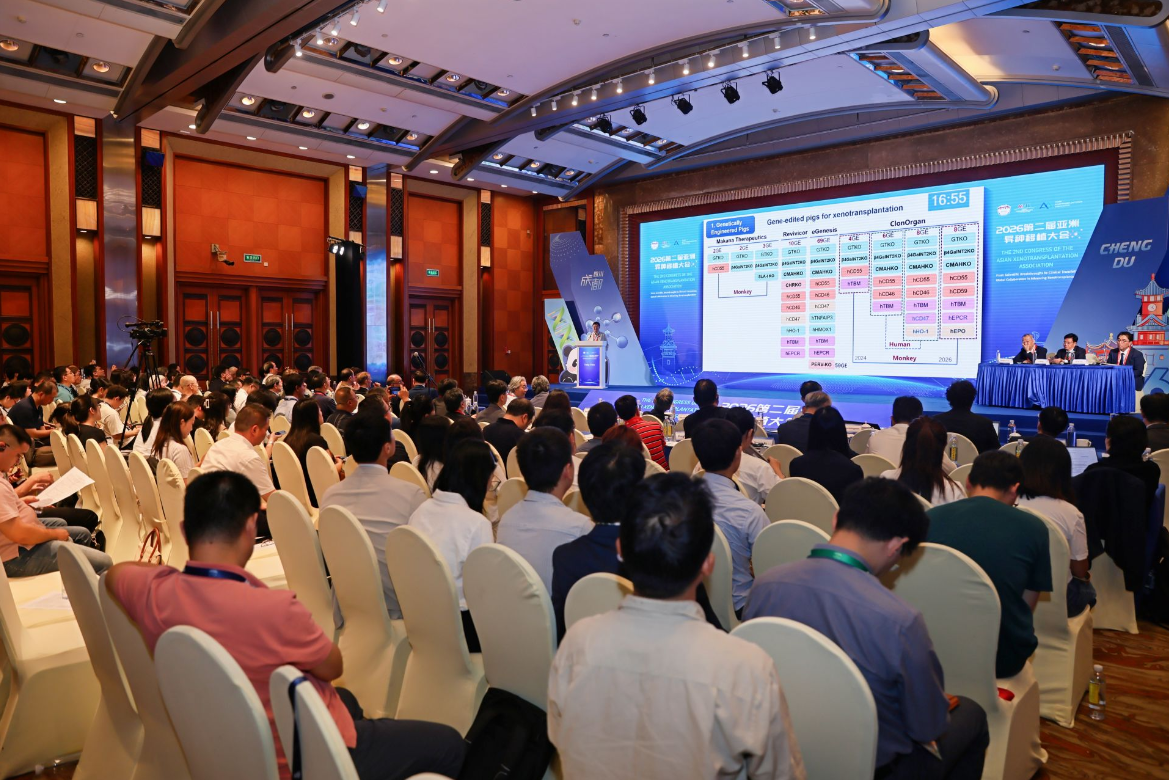
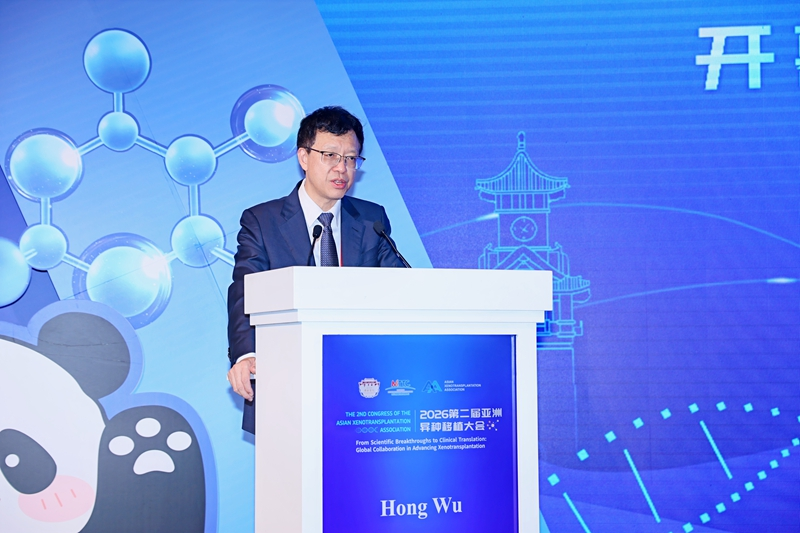
The congress was themed "From Scientific Breakthroughs to Clinical Translation: Global Cooperation Advancing Xenotransplantation," with a core focus on "promoting the safe, standardized, and clinical translation of xenotransplantation." It aimed to build a high-level academic exchange and industry collaboration platform in Asia, offering "Chinese solutions" and "Asian wisdom" to address the global shortage of organ donors. Professor Wu Hong, Vice President of West China Hospital, Sichuan University (WCH), Professor Pan Dengke, and Professor Leo Bühler, Editor-in-Chief of Xenotransplantation served as co-chairs. Academician Dong Jiahong of the Chinese Academy of Engineering attended as a special guest.
The congress featured more than ten thematic forums covering key topics such as immune rejection mechanisms, gene editing of donor pigs, preclinical research, clinical trial design, cross-species infection risk prevention and control, and industry regulation. The congress also provided interpretation of China's recently released "Guidelines for the Filing of Clinical Research on New Xenotransplantation Technologies," advancing xenotransplantation toward a new stage of standardized clinical research.
As one of the organizers of the congress, WCH has performed more than 10,000 major organ transplant surgeries since its first liver transplant in 1979, covering multiple organ types including liver, kidney, heart, lung, pancreas, and larynx. Among these, more than 8,000 kidney transplants have been performed, ranking among the top two nationally, with living-donor kidney transplants ranking first in China for 13 consecutive years. Seven laryngeal transplants have been completed, making WCH the world's largest treatment center for this procedure.
Building on its well-established clinical allotransplantation system, WCH is accelerating its efforts in xenotransplantation. As early as the 1990s, the hospital began constructing gene-edited pigs and conducting theoretical exploration. In recent years, it has rebuilt its xenotransplantation team and research platform, and led the establishment of the Sichuan Provincial Key Laboratory of Xenotransplantation and Regeneration. To date, the team has conducted four pig-to-macaque xenogeneic kidney transplant explorations and completed two pig-to-macaque xenogeneic bladder transplants, including the world's first such procedure in November 2025. These efforts have laid an important foundation for advancing preclinical evaluation and translation of xenotransplantation.
Vice President Wu Hong noted that breakthroughs in xenotransplantation are not the achievement of a single discipline, but a highly complex "big science" endeavor encompassing agriculture, medicine, and industry. It requires cross-sector and multidisciplinary collaboration. Every step—from the breeding and transport of gene-edited donors, to patient selection, clinical technique breakthroughs, and overcoming immune rejection—requires meticulous research and repeated validation. Therefore, the widespread clinical adoption and industrialization of xenotransplantation still have a long way to go.
Background:
The Asian Xenotransplantation Association
(AXA) was established in 2025 to promote xenotransplantation as a safe,
ethically sound, and effective treatment modality, foster research
collaboration, technical exchange, and translation of results in Asia, and
advance the development of more coordinated research standards, clinical
safety, and biosafety systems. In December 2025, the first AXA Congress was
held in Haikou, Hainan Province, China. One year later, the second congress
convened in Chengdu, China. AXA continues to bring together research, clinical,
and industry forces in xenotransplantation across Asia and beyond, facilitating
in-depth exchange among countries and regions on cutting-edge technologies,
clinical translation, safety and ethics, and talent development.
