Recently, the 55th Annual Congress of the Society of Critical Care Medicine (SCCM) was held in Chicago, USA, bringing together over 6,000 critical care experts and scholars from around the world. WCH's critical care medicine team attended the congress and presented multiple original research findings in areas such as shock management, critical care ultrasound, and artificial intelligence-based early warning.
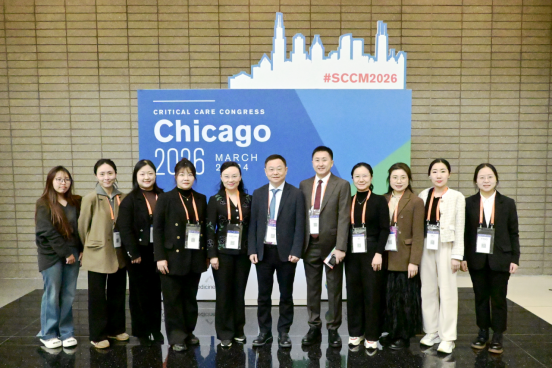
The U.S./China Forum was co-hosted by the current and incoming presidents of the critical care medicine societies of both countries. Professor Kang Yan, Specialty Director of WCH 's Critical Care Medicine Department and Incoming President of the Critical Care Medicine Branch of the Chinese Medical Association, together with Professor Chen Dechang from Shanghai Ruijin Hospital, President of the Critical Care Medicine Branch of the Chinese Medical Association, led young Chinese scholars in an in-depth discussion on the theme "Leveraging Global Scientific Opportunities." From a global health perspective, they explored topics related to "AI in Critical Care" and core critical care treatment measures, reaching a consensus on "resource sharing, data interoperability, and joint standard-setting." This demonstrated the global vision of Chinese scholars, provided direction for deeper collaboration in critical care between China and the United States, and further elevated China's position in the international critical care academic landscape.
At the "Thought Leaders: From Boundaries to Breakthroughs-Ethical Reflections on Women in Critical Care" (The Ake Grenvik Honorary Lecture) held in the main venue of the congress, Professor Liao Xuelian was invited to deliver a keynote speech titled "From Boundaries to Breakthroughs: Ethical Reflections on Women in Critical Care," systematically articulating the significant contributions and key roles of female Chinese scholars in the development of critical care medicine. This marked the first time that a Chinese critical care scholar has served as a keynote speaker in the main venue and in this honorary lecture session of the SCCM congress, fully reflecting the growing international recognition of West China Critical Care in medical humanities development and talent cultivation.
The West China Critical Care Circulation and Visual Diagnostics Subspecialty Group and the West China Visual Diagnostics and Artificial Intelligence Laboratory, led by Professor Yin Wanhong, along with laboratory managers Zeng Xueying, Zou Tongjuan, Zhou Ran, Qin Yao, and graduate student Wei Ying, reported a total of six original research findings. The coverage spanned the entire innovation chain from clinical evidence-based research to artificial intelligence applications. Leveraging the laboratory's technological platform, the related research has formed a systematic precision diagnosis and treatment system, addressing areas ranging from optimizing critical care treatment workflows and visual monitoring of shock patients to mortality risk prediction based on visual information in critically ill patients, as well as post-critical care management for conditions such as frailty. This demonstrates the team's solid accumulation in basic research and clinical translation.
Furthermore, Professor Kang Yan and Professor Liao Xuelian also participated in a roundtable meeting on China-U.S. critical care collaboration held during the congress, engaging in in-depth exchanges on various aspects of cooperation in critical care education, research, and clinical practice between the two countries, jointly promoting the development of critical care medicine in both China and the United States.
