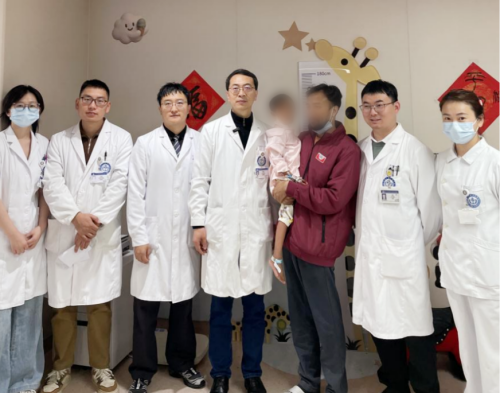
Recently, the Pediatric Surgery Department of West China Hospital, Sichuan University (WCH), in collaboration with the Liver Transplant Center, Gastroenterology Department, Vascular Surgery Department, Anesthesiology Department, Radiology Department, Ultrasound Medicine Department, and Critical Care Department, successfully performed a radical surgery for cavernous transformation of the portal vein on a 4-year-old girl from Bangladesh. The procedure lasted 10 hours and 17 minutes. The child is recovering well and was discharged 12 days after surgery.
The patient had experienced recurrent hematemesis and melena for five months. She had received endoscopic ligation therapy in her home country, but the underlying problem of portal hypertension remained unresolved. Her parents learned that Professor Jin Shuguang's team from the WCH Pediatric Surgery Department had extensive experience in treating this condition. Trusting in this expertise, they traveled a great distance to bring their daughter to WCH for treatment. The child was admitted to the Pediatric Surgery Department on March 3, 2026.
Admission workup revealed cavernous transformation of the main portal vein, extensive collateral circulation in the porta hepatis, severe splenomegaly, severe esophagogastric varices, along with thrombocytopenia and coagulation abnormalities. The diagnosis was cavernous transformation of the portal vein with portal hypertension. This rare vascular malformation can lead to life-threatening gastrointestinal bleeding. The child was at constant risk of massive hemorrhage.
Faced with this complex condition, the Pediatric Surgery Department promptly assembled an MDT with experts from multiple specialties. The team decided to perform a Meso-Rex shunt—currently the optimal surgical treatment for pediatric cavernous transformation of the portal vein. This procedure restores portal blood flow to the liver through vascular reconstruction. It is technically demanding and time-consuming. The patient was only 4 years old, with a left portal vein diameter of just 4 mm and limited available vessels for grafting, making the surgery extremely high-risk.
Prior to surgery, the Radiology and Ultrasound Medicine Departments precisely evaluated the lesion and vascular anatomy. The interventional team from the Gastroenterology Department performed selective venography to create a "vascular map." The Anesthesiology and ICU departments established risk prevention protocols in advance.
The surgery proceeded as planned on March 10. The anesthesiology team successfully managed the risk of massive bleeding during anesthesia induction. The interventional gastroenterology team performed hepatic venography, confirming that the left portal vein measured 4 mm in diameter and that intrahepatic branches were patent—meeting the criteria for surgery. Intraoperative findings showed extensive collateral vessels in the porta hepatis. The vascular surgery team performed delicate dissection and successfully harvested approximately 6 cm of the child's right internal jugular vein as a graft. Subsequently, the Pediatric Surgery and Liver Transplantation Center teams used microsurgical techniques to precisely anastomose the vessel, which measured only 4 mm in diameter. After 10 hours and 17 minutes, the surgery was successfully completed. Intraoperative blood loss was only 150 ml. Postoperative ultrasound and CTA showed patent graft flow, and the portal hypertension was fundamentally relieved.
After surgery, the ICU and Pediatric Surgery teams provided close monitoring and developed a personalized care plan. The child recovered smoothly. On postoperative day 12, she was in good spirits, eating well, and free from bleeding or other complications. She was discharged successfully.
Professor Jin Shuguang from the Pediatric Surgery Department said: "This was a foreign child, and language and cultural differences posed additional challenges. However, our team combined professional expertise with compassionate care, earned the trust of the family, and completed this life-saving mission across national borders."
It is reported that WCH's Multidisciplinary Joint Treatment Center for Pediatric Portal Hypertension has performed over 100 high-risk surgeries to date, reaching internationally advanced standards. This successful case once again demonstrates WCH's comprehensive strength and international reputation in managing complex and critical illnesses.
